

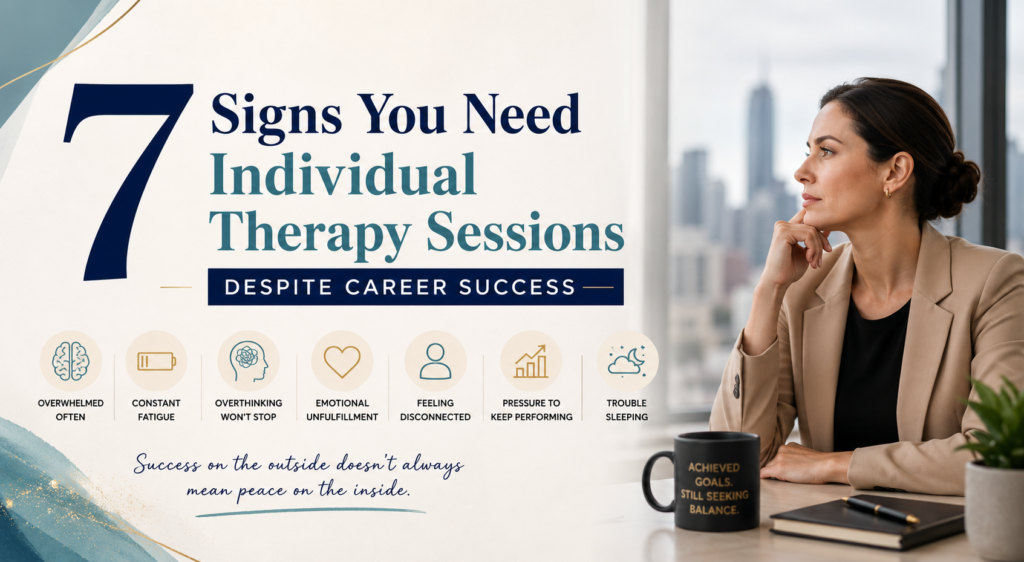
Success is often measured by promotions, salaries, awards, and public recognition. To everyone around you, your life may seem ideal. You have the dream job, financial stability, and a growing professional reputation. Yet, beneath the polished image, your emotional health may tell a very different story.
This is where individual therapy sessions become invaluable. Many successful professionals assume therapy is only for people facing severe mental health challenges. In reality, therapy is a proactive investment in emotional wellness, personal growth, and long-term resilience.
You don’t have to wait until you’re overwhelmed to ask for help. Sometimes the strongest people are the ones who recognize they deserve support before reaching a breaking point.
In this guide, you’ll discover seven meaningful signs that suggest individual therapy sessions could improve your emotional well-being—even if your career looks perfect from the outside.
Why Career Success Doesn’t Always Equal Emotional Wellness
Society often celebrates visible achievements while overlooking invisible struggles. Promotions are applauded. Salary increases receive congratulations. New leadership roles inspire admiration.
However, emotional exhaustion rarely receives the same attention.
Many professionals become experts at hiding stress. They smile during meetings, meet impossible deadlines, and continue producing exceptional work even when they feel emotionally drained. Over time, this pattern creates an unhealthy disconnect between external success and internal well-being.
Think of emotional health like maintaining a high-performance vehicle. Even the most powerful engine requires regular maintenance. Ignoring warning signs may not stop the car immediately, but eventually the damage becomes impossible to ignore.
The same principle applies to your mental health.
Individual therapy sessions provide a confidential space where you can process emotions without judgment. Rather than waiting for burnout or anxiety to become overwhelming, therapy helps identify challenges early and equips you with practical strategies for managing them.
Professionals from every industry—including executives, entrepreneurs, healthcare workers, educators, and creatives—benefit from therapy because emotional wellness directly influences decision-making, productivity, creativity, and relationships.
Here are some common misconceptions that often prevent people from seeking support:
| Myth | Reality |
|---|---|
| Therapy is only for crises. | Therapy supports growth, prevention, and resilience. |
| Successful people shouldn’t struggle emotionally. | Success does not eliminate stress, grief, or anxiety. |
| Asking for help shows weakness. | Seeking support demonstrates self-awareness and courage. |
| Work success means life satisfaction. | Professional achievement and personal fulfillment are different experiences. |
It’s also important to recognize that modern workplaces encourage constant productivity. Emails continue after office hours. Notifications interrupt family dinners. Deadlines replace downtime. Eventually, your mind may forget how to rest.
Emotional fatigue often develops gradually.
You may notice yourself becoming impatient with loved ones. Perhaps small inconveniences suddenly feel overwhelming. Maybe you celebrate career milestones but feel strangely empty afterward.
These aren’t signs of failure.
They’re signs that your emotional needs deserve attention.
Therapy creates an opportunity to pause, reflect, and reconnect with yourself before stress begins affecting every area of your life.
Many people describe their first therapy experience as unexpectedly freeing. Instead of carrying every burden alone, they finally have a dedicated space where they can speak honestly without worrying about expectations, appearances, or professional reputation.
That’s one of the greatest strengths of individual therapy sessions. They remind you that you are more than your job title.
You are a whole person—with emotions, dreams, fears, relationships, and personal goals that deserve just as much care as your career.
Transitioning from simply surviving to genuinely thriving often begins with one courageous decision: acknowledging that emotional health matters just as much as professional success.
Sign 1: You’re Constantly Exhausted Despite Professional Achievement
At first, exhaustion may seem like a natural side effect of ambition. Long meetings, demanding projects, business travel, and endless deadlines can make anyone feel tired.
But emotional exhaustion is different.
Unlike physical fatigue, it doesn’t disappear after a good night’s sleep or a relaxing weekend. Instead, it lingers, quietly draining your motivation, patience, and enthusiasm.
You may wake up already feeling depleted.
Tasks that once excited you now feel like obligations. Even simple decisions require enormous mental effort. Your body keeps moving, but emotionally, you feel stuck.
This is often one of the earliest warning signs that individual therapy sessions could benefit you.
Emotional Burnout vs. Physical Fatigue
Understanding the difference between burnout and ordinary tiredness is essential.
Physical fatigue usually improves with rest, hydration, and proper nutrition.
Emotional burnout, however, affects how you think, feel, and interact with the world around you.
Common signs include:
- Feeling emotionally numb.
- Losing motivation for work you once enjoyed.
- Becoming unusually irritable.
- Struggling to concentrate.
- Feeling detached from coworkers and loved ones.
- Constant self-doubt despite strong performance.
- Difficulty celebrating accomplishments.
Burnout isn’t a personal weakness. It often develops when chronic stress continues without adequate recovery.
Why High Performers Often Ignore Burnout
Successful professionals are frequently rewarded for pushing through discomfort.
Over time, phrases like “I’ll rest after this project” or “Everyone else is managing” become internal habits.
Unfortunately, ignoring emotional exhaustion rarely makes it disappear.
Instead, it increases the risk of anxiety, depression, relationship conflict, sleep problems, and reduced job satisfaction.
This is where therapy offers meaningful support.
A qualified therapist helps identify the underlying causes of burnout while teaching practical coping strategies tailored to your life. Rather than simply treating symptoms, therapy encourages sustainable habits that protect your emotional health for the future.
Remember, your worth isn’t determined by how much stress you can endure.
True success includes caring for your mind with the same dedication you bring to your career.
Sign 2: Your Relationships Are Quietly Suffering
Career success can open many doors, but it should never close the ones that lead to the people who matter most. Unfortunately, when work consumes your time and emotional energy, your relationships are often the first to feel the impact.
You may still attend family gatherings, answer your partner’s questions, or spend weekends with friends. Yet emotionally, you might not be fully present. Conversations become shorter, patience wears thin, and meaningful moments begin to disappear.
This emotional distance doesn’t happen overnight. It develops gradually, making it difficult to recognize until someone close to you points it out.
If you’ve noticed growing tension at home or feel disconnected from people you love, individual therapy sessions can help you understand what’s happening beneath the surface.
Emotional Distance from Loved Ones
Stress has a way of following you home. Even after logging off from work, your mind may remain occupied with deadlines, presentations, or upcoming meetings.
As a result, you may experience:
- Difficulty expressing emotions.
- Reduced interest in social activities.
- Frequent misunderstandings with family members.
- Feeling guilty for not spending enough quality time together.
- Becoming impatient over minor disagreements.
Your loved ones may not want perfection from you—they simply want your presence. Therapy helps you reconnect with your emotions so you can rebuild stronger, healthier relationships.
Work-Life Imbalance
Many professionals wear busyness like a badge of honor. However, constantly sacrificing personal time eventually creates emotional strain.
Healthy work-life balance isn’t about splitting every hour equally. It’s about making room for the relationships and experiences that give life meaning.
Therapy encourages you to establish healthy boundaries, recognize unhealthy work habits, and communicate your needs more effectively. As these changes take root, you’ll likely find yourself becoming more engaged with the people who care about you most.
Remember, no promotion can replace genuine human connection.
Sign 3: Anxiety Has Become Your Daily Companion
Feeling nervous before a major presentation or important meeting is completely normal. But when anxiety becomes a constant companion, affecting your thoughts and daily routine, it’s time to pay attention.
High achievers often become so accustomed to stress that they mistake chronic anxiety for ambition.
You may tell yourself that constant worrying helps you stay prepared. In reality, persistent anxiety quietly drains your confidence, energy, and emotional well-being.
This is another strong reason why individual therapy sessions can make a lasting difference.
Hidden Symptoms of Anxiety
Anxiety doesn’t always look like panic attacks. Sometimes it appears in subtle ways that are easy to overlook.
Common hidden symptoms include:
- Constant overthinking.
- Difficulty relaxing, even during vacations.
- Racing thoughts before bedtime.
- Fear of making small mistakes.
- Feeling tense throughout the day.
- Trouble concentrating.
- Increased irritability.
- Physical symptoms such as headaches or muscle tension.
Because these symptoms develop gradually, many professionals assume they’re simply part of a demanding career.
However, living in a constant state of alert isn’t sustainable.
Therapy provides practical tools to recognize anxious thought patterns and replace them with healthier responses. Over time, you’ll learn how to respond thoughtfully instead of reacting automatically.
One of the greatest gifts therapy offers is perspective.
Instead of allowing fear to control every decision, you’ll begin responding with confidence, clarity, and self-compassion.
Sign 4: You No Longer Enjoy Your Success
Perhaps you’ve achieved goals that once seemed impossible.
You received the promotion.
You bought the dream home.
You reached financial security.
You earned the respect of colleagues.
Yet something feels strangely missing.
Rather than excitement, you experience emptiness.
Instead of pride, you immediately begin chasing the next milestone.
This emotional disconnect can be confusing because everything appears successful from the outside.
The truth is that external achievements cannot fully satisfy emotional needs.
The Psychology of Emotional Numbness
Emotional numbness often develops after prolonged periods of stress, pressure, or perfectionism.
Your mind becomes so focused on achieving the next goal that it forgets how to experience joy in the present moment.
Some common signs include:
- Feeling emotionally flat after major accomplishments.
- Rarely celebrating personal victories.
- Losing interest in hobbies.
- Feeling disconnected from your own emotions.
- Believing nothing is ever “good enough.”
This cycle can become exhausting.
You continue achieving more while feeling less fulfilled.
Individual therapy sessions create space to explore why your accomplishments no longer bring happiness. A therapist can help you reconnect with your values, identify emotional needs, and rediscover activities that genuinely bring fulfillment.
True success isn’t measured only by professional recognition.
It’s also measured by your ability to experience gratitude, peace, and joy.
When emotional wellness improves, success becomes something you experience—not just something you achieve.
Sign 5: Perfectionism Controls Your Decisions
Many successful people describe themselves as perfectionists.
At first glance, perfectionism appears positive. It encourages high standards, attention to detail, and strong work ethics.
But beneath the surface, unhealthy perfectionism often creates constant fear.
Fear of failure.
Fear of criticism.
Fear of disappointing others.
Fear of not being enough.
When perfectionism controls your decisions, every mistake feels catastrophic, and every success feels temporary.
You may spend hours revising work that’s already excellent. You may delay opportunities because you’re waiting for the “perfect” moment. Or perhaps you constantly compare yourself with others despite your impressive achievements.
This mindset is emotionally exhausting.
Therapy helps uncover the beliefs driving perfectionism, many of which begin years before your professional career.
During individual therapy sessions, you’ll learn to:
- Set realistic expectations.
- Accept healthy imperfections.
- Build self-confidence that isn’t dependent on performance.
- Replace self-criticism with self-compassion.
- Celebrate progress rather than demanding perfection.
Imagine how much emotional freedom becomes available when your value is no longer tied to flawless performance.
Instead of constantly asking, “What if I fail?”
You’ll begin asking,
“What meaningful step can I take today?”
That shift in perspective can transform not only your career but your entire life.
Sign 6: You’re Carrying Emotional Baggage Alone
One of the greatest misconceptions about successful people is that they have everything under control. In reality, many professionals quietly carry emotional burdens that no one else can see.
Perhaps you’ve experienced the loss of a loved one, a painful breakup, childhood trauma, family conflict, or years of overwhelming pressure. Instead of processing these emotions, you pushed them aside because your career demanded your full attention.
For a while, that strategy may have seemed effective. You continued meeting deadlines, attending meetings, and achieving goals. But emotional pain rarely disappears simply because it’s ignored.
Unresolved emotions often find other ways to surface. They may appear as chronic stress, sudden anger, persistent sadness, difficulty trusting others, or an overwhelming feeling that something isn’t right—even when life seems stable.
This is where individual therapy sessions become a safe and healing space.
A therapist doesn’t judge your experiences or tell you how you should feel. Instead, they help you understand your emotions, identify patterns, and develop healthier ways to cope with life’s challenges.
Why Bottling Up Emotions Can Be Harmful
Many people believe expressing emotions is a sign of weakness. However, suppressing feelings for months or years can affect both mental and physical health.
Signs that you’re carrying unresolved emotional baggage include:
- Frequently feeling overwhelmed without knowing why.
- Becoming emotional over seemingly small situations.
- Avoiding conversations about your past.
- Feeling emotionally disconnected from yourself.
- Struggling to trust people, even those who care deeply about you.
- Repeating unhealthy relationship patterns.
- Feeling emotionally “stuck.”
Healing begins when you allow yourself to acknowledge what you’ve been carrying.
Therapy provides practical techniques to process difficult experiences without becoming overwhelmed. As you work through these emotions, you’ll likely notice greater emotional balance, improved relationships, and a renewed sense of peace.
Remember, healing doesn’t erase the past. It changes the way the past influences your present.
Sign 7: You Feel Lost Despite Having Everything
This may be the most confusing sign of all.
From the outside, your life appears complete.
Your career is thriving.
Your finances are stable.
People admire your accomplishments.
Yet inside, you keep asking yourself questions you can’t answer.
“Why don’t I feel happier?”
“Is this really the life I wanted?”
“Why do I feel empty after reaching every goal?”
These questions don’t make you ungrateful. They make you human.
Success without purpose can leave even the most accomplished individuals feeling emotionally adrift.
Many professionals spend years climbing a ladder, only to realize it was leaning against the wrong wall.
When Achievement No Longer Feels Meaningful
Feeling lost often signals that your emotional needs have evolved.
Perhaps your priorities have changed.
Maybe your definition of success no longer matches the life you’re living.
Or perhaps you’ve spent so many years meeting other people’s expectations that you’ve forgotten what truly matters to you.
Individual therapy sessions offer a space to rediscover your identity beyond your job title.
A therapist can help you explore questions such as:
- What gives my life meaning?
- What values truly matter to me?
- What kind of relationships do I want to build?
- What does personal happiness look like?
- How can I create a life that feels fulfilling rather than simply successful?
These conversations often become life-changing.
Instead of chasing endless achievements, you’ll begin making decisions that align with your authentic values.
Purpose doesn’t always come from doing more.
Sometimes it comes from slowing down long enough to hear your own heart.
Benefits of Individual Therapy Sessions
Seeking therapy isn’t about fixing something that’s broken. It’s about strengthening the parts of yourself that deserve care, attention, and growth.
Whether you’re managing workplace stress or navigating personal challenges, individual therapy sessions provide tools that can improve every aspect of your life.
Some of the most valuable benefits include:
Improved Emotional Awareness
Therapy helps you recognize your emotions before they become overwhelming. Rather than reacting impulsively, you’ll learn to respond with greater clarity and confidence.
Healthier Stress Management
Stress is unavoidable, but chronic stress doesn’t have to control your life.
Therapists teach evidence-based coping strategies such as mindfulness, cognitive restructuring, relaxation techniques, and healthy boundary setting.
Better Communication Skills
Many conflicts arise because emotions remain unspoken.
Therapy helps you communicate your thoughts, needs, and feelings in ways that strengthen relationships instead of creating distance.
Increased Self-Confidence
When your self-worth is no longer based solely on achievements, confidence becomes more stable.
You begin trusting yourself even during setbacks.
Stronger Decision-Making
Emotional clarity leads to better choices.
Instead of making decisions based on fear, guilt, or perfectionism, you’ll develop confidence in your own judgment.
Greater Resilience
Life will always include unexpected challenges.
Therapy doesn’t remove those challenges, but it equips you with healthier ways to face them.
Over time, you’ll recover more quickly from setbacks and approach uncertainty with greater emotional strength.
A Safe Place Without Judgment
Perhaps the greatest benefit of therapy is having one place where you don’t have to pretend.
You don’t need to impress anyone.
You don’t need to appear strong.
You don’t need to have all the answers.
You simply need to show up as yourself.
That level of honesty can be incredibly healing.
How to Choose the Right Therapist
Finding the right therapist is an important step in your mental wellness journey.
Every therapist brings different experience, communication styles, and areas of expertise. Choosing someone who understands your needs can make therapy more comfortable and effective.
Here are several factors to consider:
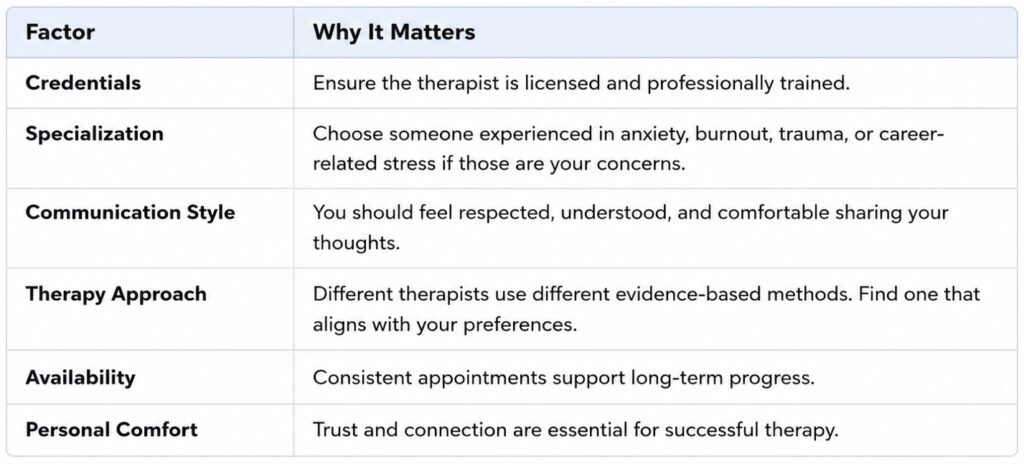
Don’t feel discouraged if your first therapist isn’t the perfect fit.
Just as every person is unique, every therapeutic relationship is unique.
Finding the right professional is part of the journey—and once you do, the benefits can extend far beyond your career into every area of your life.
Frequently Asked Questions (FAQs)
1. What are individual therapy sessions?
Individual therapy sessions are one-on-one meetings between you and a licensed mental health professional. These sessions provide a confidential, supportive environment where you can explore your thoughts, emotions, behaviors, and personal challenges. Whether you’re dealing with anxiety, burnout, relationship issues, grief, or simply seeking personal growth, therapy offers practical tools and emotional support tailored to your unique needs.
2. Do I need therapy if my career is going well?
Absolutely. A successful career doesn’t guarantee emotional well-being. Many high-achieving professionals experience stress, loneliness, perfectionism, or emotional exhaustion despite reaching their career goals. Therapy isn’t only for moments of crisis—it’s also a proactive way to maintain mental wellness, strengthen resilience, and improve your overall quality of life.
3. How often should I attend individual therapy sessions?
The frequency of therapy depends on your goals, personal circumstances, and your therapist’s recommendations.
A common schedule includes:
- Weekly sessions for ongoing support.
- Biweekly sessions for maintenance and continued growth.
- Monthly sessions after achieving significant progress.
Consistency is often more beneficial than the number of sessions alone. Your therapist will work with you to create a schedule that fits your needs and lifestyle.
4. Are individual therapy sessions confidential?
Yes. Confidentiality is one of the foundations of professional therapy. Licensed therapists are ethically and legally required to protect your privacy, with only a few exceptions involving immediate safety concerns or legal obligations.
Knowing that your conversations remain private allows you to speak honestly, process difficult emotions, and work toward healing without fear of judgment.
5. How long does therapy take to show results?
Every person’s journey is unique. Some individuals notice positive changes after only a few sessions, while others benefit from longer-term therapy.
Progress depends on factors such as:
- Your goals.
- The challenges you’re facing.
- Your willingness to apply new coping strategies.
- The strength of your therapeutic relationship.
Healing isn’t a race. Every step forward—no matter how small—is meaningful.
6. Can therapy improve my professional performance?
Yes. Although therapy focuses on emotional well-being, many professionals find that it also enhances their work performance.
Benefits often include:
- Better focus and concentration.
- Improved decision-making.
- Healthier leadership skills.
- Greater confidence.
- Reduced stress.
- Stronger workplace communication.
- Increased emotional resilience.
When your mind feels healthier, your professional life often becomes more productive and fulfilling.
7. Is seeking therapy a sign of weakness?
Not at all.
Choosing therapy reflects courage, self-awareness, and a commitment to personal growth. It takes strength to acknowledge your emotions and invest in your mental well-being.
Many successful leaders, entrepreneurs, healthcare professionals, athletes, and executives work with therapists because they understand that emotional health is essential for sustained success.
Conclusion
From the outside, a successful career can make life appear perfect. Friends admire your achievements. Colleagues respect your accomplishments. Family members celebrate your milestones.
Yet behind every polished résumé and every professional victory is a human being with emotions, fears, hopes, and dreams.
If you recognized yourself in any of these seven signs, remember that you don’t have to carry the weight alone.
Choosing individual therapy sessions isn’t about admitting defeat. It’s about choosing growth over silence, healing over exhaustion, and self-compassion over relentless pressure.
Your career is an important part of your identity, but it is not your entire identity.
You deserve meaningful relationships.
You deserve emotional peace.
You deserve moments of genuine happiness that aren’t tied to the next promotion or achievement.
Most importantly, you deserve to feel whole—not only successful.
Healing begins with a single decision: allowing yourself to ask for support.
The strongest people are not those who never struggle.
They are the ones who recognize that every heart needs care, every mind deserves rest, and every person has the right to live a life that feels as fulfilling on the inside as it appears on the outside.
When you invest in your emotional well-being today, you’re also investing in a healthier future, stronger relationships, wiser decisions, and a more meaningful life.
Never forget this:
Your success may impress the world.
But your well-being is what allows you to truly enjoy it.
Final Thoughts
Life isn’t about appearing perfect. It’s about living authentically, embracing growth, and giving yourself permission to heal.
No matter where you are in your journey, remember that asking for help is never a step backward. It is often the first step toward becoming the healthiest, happiest, and most resilient version of yourself.
Your career may define what you do.
Your emotional well-being defines how you experience life.
Choose both success and peace—you deserve them.