

Online Therapy for Overthinking

Find Clarity, Break the Cycle & Regain Peace of Mind
Do you find yourself constantly ruminating about conversations, fearing the future, or unable to quieten your mind to simply enjoy the present? If you feel like your head is often in overdrive, you are not alone.
Overthinking can become a part of your day to day life, creeping in when you least expect it. From making the 'right' decision to avoiding mistakes, overthinking can consume your hours and leave you feeling drained and defeated. It can be exhausting, affecting your productivity, relationships, confidence, and sleep.
Wellness Casaa's online therapy for overthinking can help you to unravel the root cause of your constant overthinking and provide you with practical solutions to stop it for good.
Whether you are worried excessively about the 'what ifs', second-guessing yourself, or ruminating about the past, our counsellors can help you to navigate through these thoughts and enable you to change your unproductive thought patterns. Online therapy makes it easy for you to access the professional help and advice of our counsellors from the comfort and privacy of your own home.
We offer in-person overthinking counselling in Lucknow as well as secure online therapy sessions across India, making professional mental health support accessible wherever you are.

What Is Overthinking?
Overthinking is not simply thinking through a situation thoroughly or engaging in careful consideration. It is when your mind becomes trapped in recurring thought patterns that do not enable you to make a decision or solve a problem.
Instead of being productive and helpful, these thoughts consume your time and energy, making you feel more stressed and agitated. Overthinking can include worrying endlessly about a situation, imagining the worst-case-scenario, constantly seeking reassurance, ruminating over past events, questioning your decisions, and second-guessing yourself.
Common examples of overthinking include:
- Replaying conversations in your head.
- Over-analyzing simple situations.
- Constantly worrying about the future.
- Spending endless hours making decisions.
- Seeking reassurance from others.
- Racing thoughts and an inability to switch off.
- Questioning yourself relentlessly.
- Thinking about situations that have already occurred.
- Constantly thinking about mistakes that have been made.
Although most people overthink from time to time, it may affect your quality of life if you are unable to stop. At Wellness Casaa, we can help you to understand precisely what it is that you are overthinking about, so that you can then move on to breaking this unproductive cycle.
When does overthinking become a problem?
Trying to think through a situation to make the "best" choice or decision is entirely normal.
However, it can become a problem when you are unable to put down these thoughts or when they greatly affect your quality of life.
It can be challenging to distinguish between unproductive thinking and thoughtful analysis.
If you are finding that your overthinking is negatively impacting your ability to enjoy your life, it can be helpful to speak with a professional about how to control these thoughts.
You may be overthinking if:
- You spend more time worrying than actually doing things.
- You second guess yourself frequently.
- You imagine the worst-case-scenario.
- You constantly question your decisions.
- You find it hard to make decisions.
- You spend hours worrying about certain topics.
- You lose sleep due to your worrying mind.
- You procrastinate due to fear of failure.
- You are overly anxious or stressed most of the time.
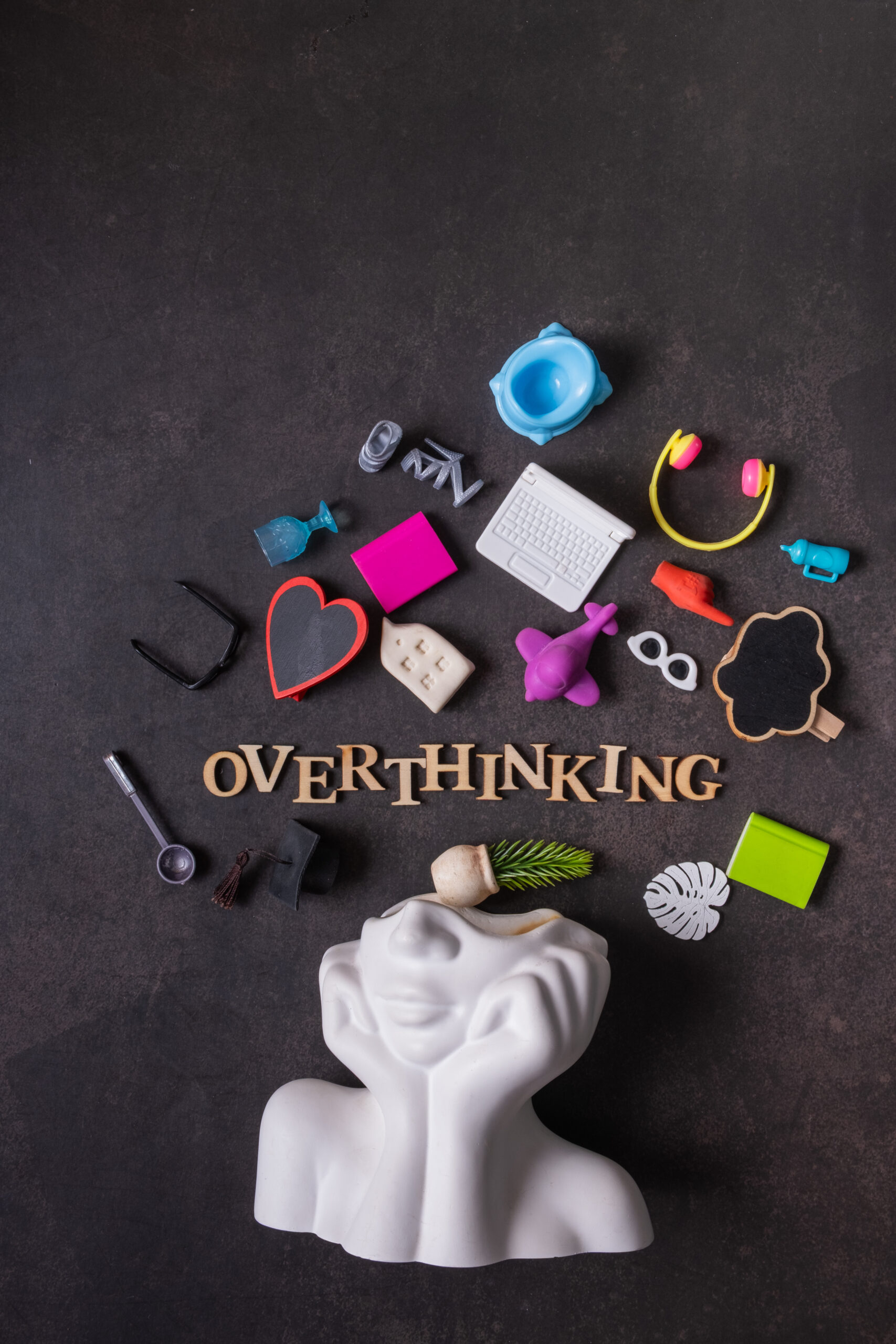
Many people report feeling like their brain is always "on", and that it is hard for them to stop thinking about things. Even during enjoyable moments, such as seeing loved ones or relaxing before bed, their mind jumps from one thought to another without stopping. This is a sign that they may require professional support and guidance in learning how to control these thoughts.

What are the most common symptoms of overthinking?
Overthinking not only impacts your thoughts, but it can also affect your emotions, behaviour, physical health, and overall quality of life.
Emotional Symptoms
Many people who engage in excessive worrying and overthinking experience emotional difficulties.
This can include:
- Constant worry
- Inability to relax
- Increased anxiety
- Self-doubt
- Easily overwhelmed
- Fear of mistakes
- Feeling guilty
Cognitive Symptoms
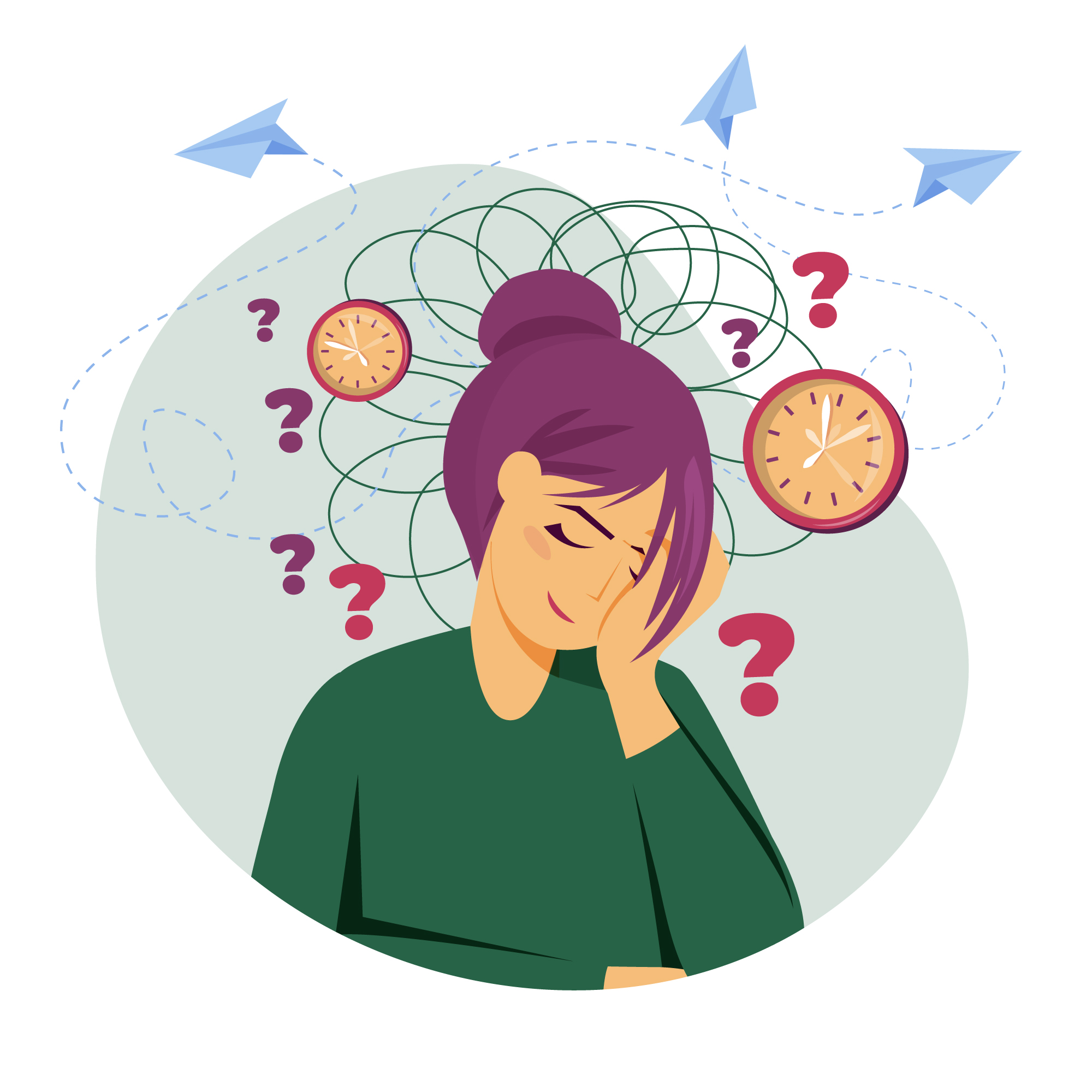
If you are constantly worrying about the future or ruminating about the past, you may find that your mind feels like it is always racing.
Common symptoms of overthinking can include:
- Racing thoughts
- Worrying unnecessarily
- Constant questioning
- Constantly replaying conversations
- Seeking reassurance
- Perfectionism
- Difficulty making decisions
- Difficulty focusing on the present
Many people find that their mind is constantly analysing every possible outcome of every situation, which can be emotionally exhausting. It can be hard to feel calm when your mind is constantly thinking, worrying, and analysing.
Physical Symptoms
Even though overthinking begins in the mind, it can still have an impact on your body and overall physical health.
Common physical symptoms of overthinking can include:
- Difficulty sleeping
- Restless sleep
- Muscle tension
- Headaches
- Fatigue
- Increased heart rate
- Digestive issues

Behaviours Associated with Overthinking
Overthinking often influences behaviour in ways that can make daily life more challenging. Many of these behaviours develop as attempts to reduce uncertainty or avoid making mistakes, but they usually provide only temporary relief and may reinforce the habit of overthinking over time.
Common behaviours include:- Procrastination: Delaying tasks due to fear of making the wrong decision or not meeting high expectations.
- Avoidance: Staying away from situations, conversations, or opportunities that feel uncertain or emotionally challenging.
- Seeking Reassurance: Frequently asking others for validation or confirmation before making decisions.
- Constant Checking: Repeatedly reviewing emails, messages, work, or tasks to ensure everything is "perfect."
- Difficulty Completing Tasks: Struggling to finish projects because of perfectionism or continuous self-doubt.
- Avoiding Social Situations: Withdrawing from social interactions due to fear of judgement or embarrassment.
- Excessive Research: Spending too much time gathering information before making even simple decisions.
Recognising these patterns is the first step towards change. Through therapy, you can learn healthier coping strategies that help reduce overthinking, build confidence, and make decisions with greater clarity.

Why do people overthink?
There is rarely a single reason why someone develops the habit of overthinking. It is often the result of a combination of personality traits, life experiences, emotional responses, and current circumstances. For some people, overthinking stems from a fear of making mistakes or a desire to make the "perfect" decision. Others may overanalyse situations because of anxiety, uncertainty about the future, or past experiences such as criticism, failure, or emotional distress. High personal expectations, perfectionism, ongoing stress, and major life changes can also contribute to repetitive thinking patterns. While overthinking may feel like an attempt to stay in control or prevent problems, it often leads to increased stress, self-doubt, and mental exhaustion instead of providing real solutions. Understanding the underlying reasons behind these thought patterns is an important step towards lasting change. Through professional therapy, individuals can identify the root causes of their overthinking, develop healthier coping strategies, and build the confidence to respond to uncertainty in a more balanced and constructive way.
Fear of mistakes
Many people who overthink place extreme pressure on themselves to make the "right" decisions and avoid mistakes at all costs. Instead of feeling confident in their own judgement, they spend hours analysing every possible outcome so that they can eliminate every potential error. Unfortunately, this often leads to increased stress rather than reassurance.
Anxiety over the future
For many people, the thought of the future is anxiety-inducing. When people feel as though they cannot control what is going to happen, they may attempt to predict and prepare for every possible outcome. Unfortunately, this can lead to unproductive worrying and imagining the worst-case-scenario.
Past experiences
People who have previously experienced failure, rejection, criticism, or other negative events may develop unproductive thinking patterns as a way of avoiding future disappointment. Overthinking can develop as a response to difficult or unpleasant experiences.
High expectations
People with very high expectations for themselves and others may constantly focus on whether things are "good enough" for them. This can involve a lot of self-criticism and worry that something will not meet their standards.
Stressful lifestyle
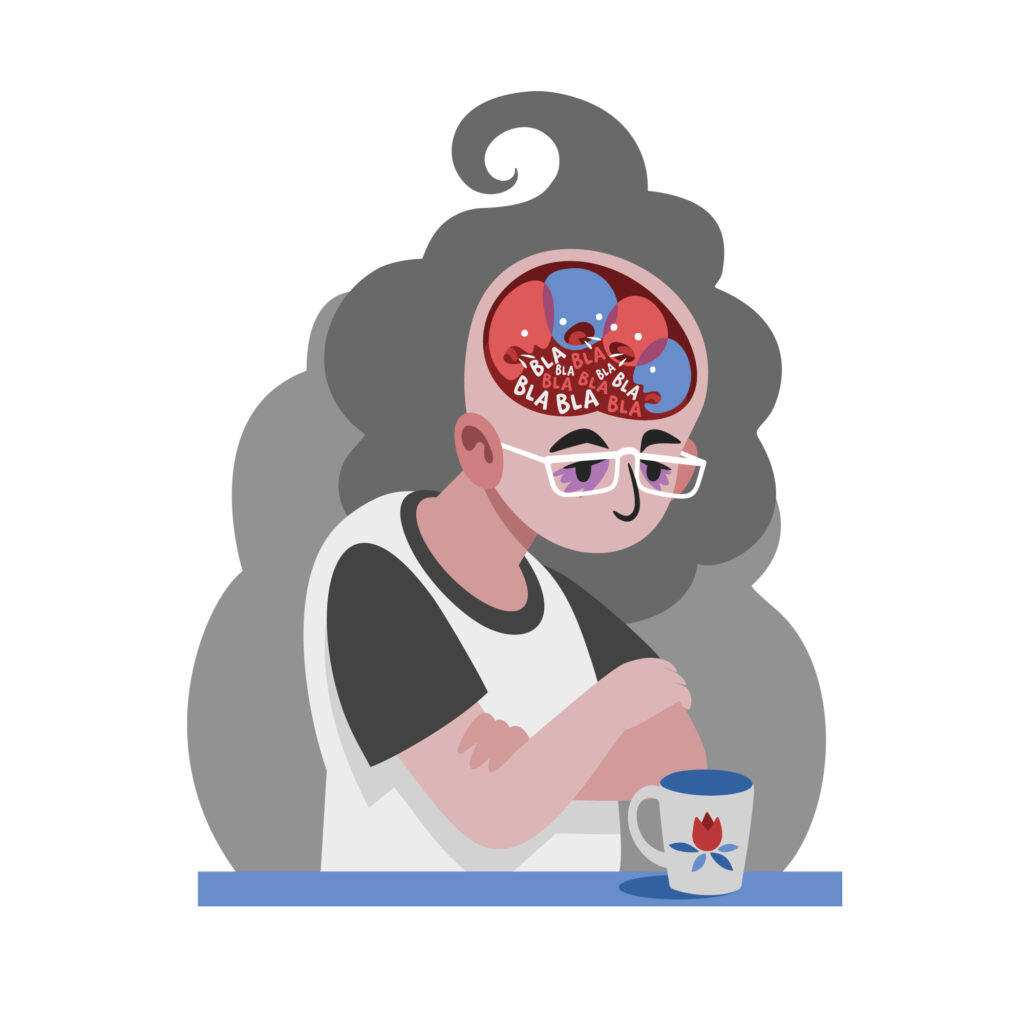
Modern-day lifestyles can make it very easy to become stressed and overwhelmed. Many people are constantly balancing multiple responsibilities, meaning that they have very little time to sit back and relax. This can lead to a very busy, stressed mind that is unable to switch off.

How can overthinking affect everyday life?
It is very common for people to feel that overthinking is simply an unproductive habit. However, it can greatly affect your quality of life by impacting many different areas, including:
RelationshipsWhen you are constantly worrying about the future or ruminating about the past, it can be extremely difficult to enjoy your relationships. Constant self-doubt and fear of mistakes can leave you feeling emotionally drained and unable to communicate openly with others.
Career and studiesOverthinking can severely impact your performance at work and at school. It can prevent you from making timely decisions and cause you to become overwhelmed with unproductive worry.
Emotional wellbeingLiving with constant unproductive thoughts can be emotionally exhausting, leaving you feeling drained and unhappy. It can also affect your ability to feel happy and enjoy everyday life.
SleepIf your mind is constantly racing when it should be resting, it can be very difficult to fall asleep or stay asleep through the night. Overthinking can also leave you feeling tired and unfocused the following day.
ConfidenceConstantly second-guessing yourself can leave you feeling emotionally drained and unsure about everything that you do.
What are the warning signs that it's time to seek professional help for overthinking?
Most people feel that overthinking is simply a part of their personality, however, if it is impacting your life it can be helpful to seek professional advice.
You may benefit from online therapy for overthinking if:- Your thoughts feel intrusive and uncontrollable
- You spend hours a day worrying
- Your overthinking affects your sleep, relationships, or ability to make decisions
- You are constantly seeking reassurance from others
- Your mind feels unsettled most of the time
Seeking professional help is an important step in ensuring that you can manage these unwanted thoughts in a healthy and effective manner. If you are constantly feeling stressed, anxious or unable to relax, it may be time to speak with a professional about how to stop overthinking.
What can I expect from our online therapy for overthinking?
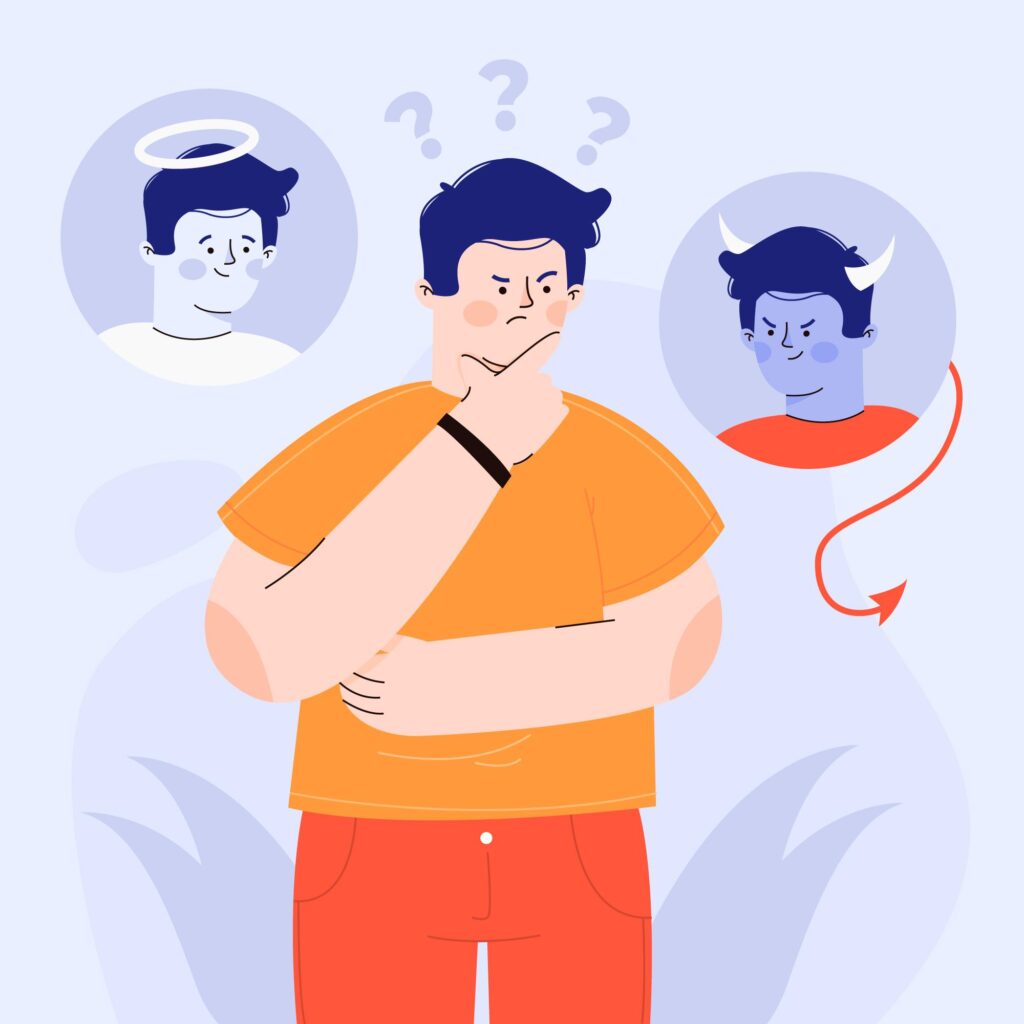
Overthinking can feel like your mind is constantly working against you. It may pressure you to question every possible decision, imagine every potential outcome, and second guess every move you make It is designed to prevent you from making mistakes, or feeling prepared for the future. Unfortunately, it can often leave you feeling more stressed, unsure and insecure than before.
Our online therapy for overthinking can help you to manage these unwanted thoughts and teach you how to stop overthinking in order to feel calmer and more confident.
Wellness Casaa's experienced counsellors can help you to unravel the root of your unproductive thoughts so that you can then move on to developing healthier thinking patterns. Our therapy for overthinking is bespoke, meaning that it is designed specifically for you
Instead of offering generic advice, our counsellors will work directly with you in order to determine the cause of your unwanted thoughts. From there, you will then be able to learn practical skills and techniques that can help you to stop overthinking for good.
Overthinking Counselling in 4 Simple Steps
Everyone overthinks for different reasons.
For some people, it is due to perfectionism at work. For others, it could be due to self-doubt, anxiety, relationship problems, health worries, fears, and more. As a result, our counsellors take a bespoke approach to therapy, as oppose to a generic approach.
Step 1: Understand your thoughtsThe first step in counselling involves getting to know you We will discuss your concerns and complete an initial assessment so that we can truly understand your needs. Our counsellors will ask questions about:
- What kinds of thoughts you are struggling with
- How long you have been experiencing them
- What impact these thoughts are having on your life
- What you hope to achieve from therapy
This stage is essential in determining the best course of action, as counsellors cannot determine your needs without understanding your situation.
Step 2: Learn about your unproductive thinking patternsOne of the most important aspects of overcoming unproductive worry is identifying the cause. Our counsellors will discuss these thoughts in detail to ensure that we truly understand their origin. Together, we will discuss the various unproductive thinking patterns that you may be experiencing, such as:
- Catastrophising
- Self-criticism
- Perfectionism
- Constant worrying
- Excessive responsibility
- Repeating thoughts
- Seeking reassurance
- The need for control
Therapy is not just about diagnosing a problem, it is also about solving it. As a result, this stage of counselling focuses on developing personal coping strategies that can help to reduce unwanted thoughts Depending on your needs, we may focus on various areas, such as:
- Managing intrusive thoughts
- Building confidence and reducing self-criticism
- Improving decision making skills
- Enhancing emotional regulation
- Making decisions without excessive worry
- Becoming more self-compassionate
- Reducing perfectionism
- Improving work-life balance
- Setting realistic expectations
- Becoming more emotionally intelligent
These strategies are designed to be bespoke to your specific needs, as oppose to a generic, one-size-fits-all approach.
Step 4: Make long term positive changesThe overall aim of counselling is to make long term positive changes so that you can enjoy a lasting sense of wellbeing. As therapy progresses, you will start to feel more emotionally intelligent, confident, and capable when it comes to managing unwanted worries. As a result, you will find that overthinking has a much smaller impact on your day to day life. As you move through these stages, you will see gradual improvements in your mood, confidence, productivity, and general quality of life.
What types of therapy do we offer for overthinking?
Our counsellors specialise in a number of different therapeutic approaches, including:
Cognitive Behaviour Therapy (CBT)CBT helps you to understand the link between your thoughts, emotions, and behaviours. By identifying unproductive thought patterns, you can then learn to challenge them in order to improve your emotional wellbeing. This type of therapy is very effective for people struggling with unproductive worrying, perfectionism, and excessive analysing of situations.
Acceptance and Commitment Therapy (ACT)ACT enables you to detach from unproductive thoughts so that you can make more valued life choices.
Mindfulness-Based CounsellingThis form of therapy enables you to become more aware of the present moment, so that you can learn to let go of unproductive thoughts that keep you in the past or future.
Solution Focused CounsellingIf your unproductive worrying is linked to specific concerns, this form of counselling can be used to help you identify practical solutions.

Mindfulness-Based Techniques
Anxiety often keeps people focused on future uncertainties.
Mindfulness practices help develop greater awareness of the present moment without becoming overwhelmed by anxious thoughts.
These techniques can improve emotional regulation, concentration, and the ability to respond calmly during stressful situations.
Acceptance and Commitment-Based Strategies
Some experiences cannot be completely controlled. Rather than struggling against every anxious thought, acceptance-based approaches teach you how to make room for uncomfortable emotions while continuing to move towards what matters most in your life.
This approach helps reduce the impact anxiety has on your decisions and daily activities.
Relaxation and Emotional Regulation Techniques
Physical symptoms such as muscle tension, rapid breathing, or a racing heartbeat can make anxiety feel even more intense.
Your psychologist may introduce practical exercises to help calm your nervous system, improve body awareness, and reduce physiological stress responses.
Psychoeducation
Understanding why anxiety happens often reduces fear itself.
Throughout counselling, you'll learn how anxiety affects the brain and body, what maintains anxious cycles, and why certain therapeutic strategies are effective. This knowledge empowers you to make informed decisions about your mental wellbeing.
What happens during online therapy for overthinking?
If you are a new client, you may have a number of questions regarding online therapy.
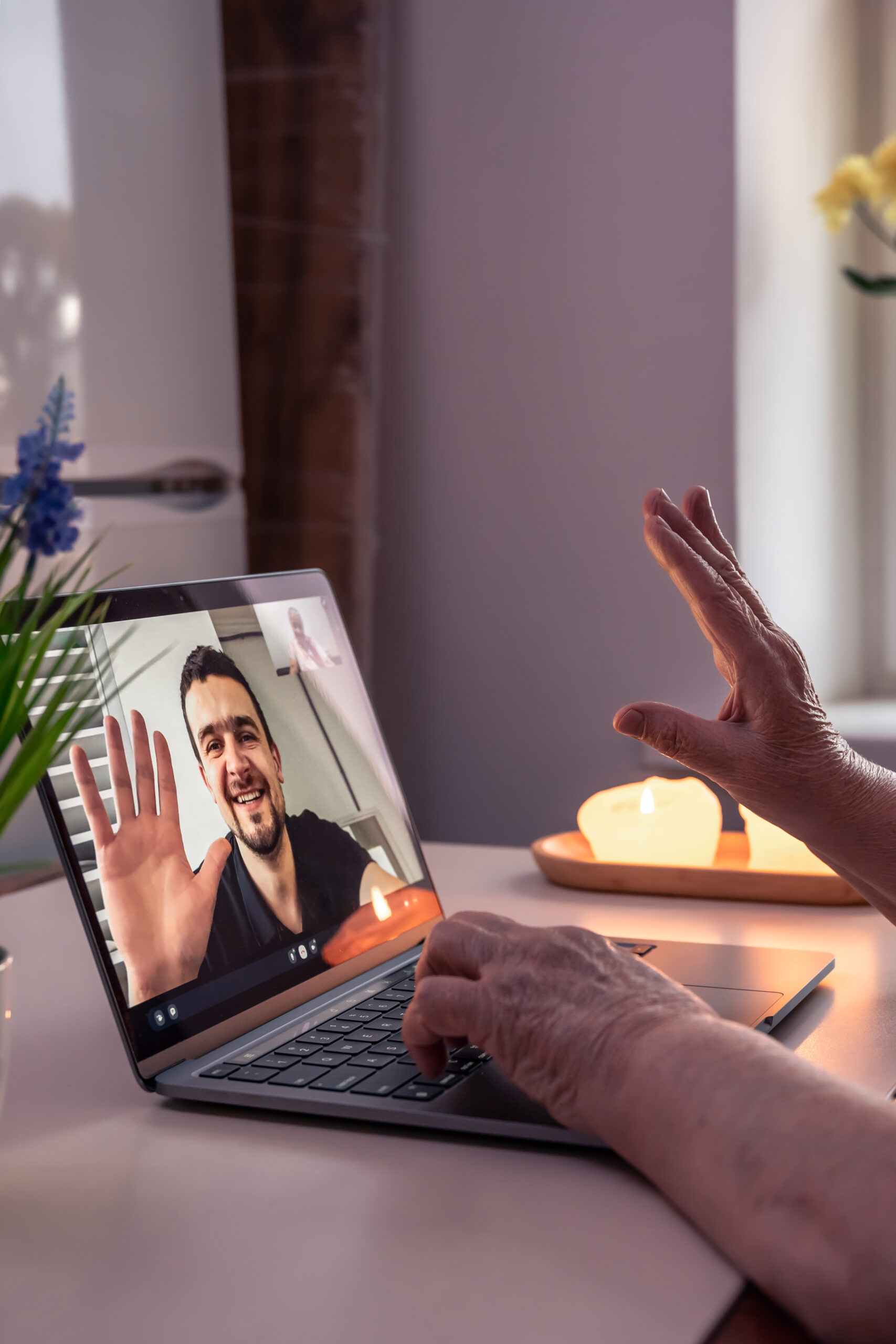
Our online counselling service works in the exact same way as face-to-face therapy, with the only difference being that the sessions take place online.
Prior to your appointment
Once you have booked your appointment, you will receive instructions regarding how to access the online counselling service We recommend that you complete this in a quiet environment where you are able to speak freely without being overheard.
During your session
At the beginning of your session, your counsellor will spend some time understanding your concerns before they begin to work together to address them
Your therapy sessions will include:- Open discussions
- Goal setting
- Therapeutic practices and exercises
- Reflection and review
- Guidance and advice specific to your situation
There is no pressure to share everything at once, or to explain everything in too much detail.
Between your sessions
The progress you make is not limited to your therapy sessions; they continue between them too. Depending on your needs, your counsellor may ask you to practice certain exercises outside of your sessions. These exercises are designed to support you in between your appointments, with the ultimate aim of reducing your unproductive worrying in day to day life.
What are the benefits of online therapy for overthinking?
By choosing our online therapy service, you will benefit from the following:
Access to expert advice and guidance
Our counsellors have extensive experience in helping people who struggle with overthinking, unproductive analysing, and unwanted worrying.
Confidential, discreet supportYour privacy is extremely important to us which is why we ensure that all of our therapy sessions are held in a safe and secure environment.
Personalised, bespoke supportWe understand that everyone is different which is why our counsellors will design a unique treatment plan for you.
Practical, expert adviceOur counsellors will provide you with practical advice that is based on years of specialist knowledge and experience, rather than a generic approach that is designed for everyone.
Flexible online video appointments
By choosing our online therapy service, you have the flexibility of scheduling your appointments at a time and date that suits you. A long term, sustainable approach to change Our counsellors believe in creating long lasting change as oppose to simply managing your unproductive worries in the short term.
Why choose Wellness Casaa for online therapy?
Finding the right therapist can be challenging, especially when you want someone who will listen to you without being judgemental. At Wellness Caaa, we are committed to providing our clients with a safe, supportive, and understanding environment where they are able to openly discuss their concerns.
Experienced Psychologists
Our counselling services are provided by qualified psychologists with extensive experience in helping people who struggle with anxiety, stress, perfectionism, emotional struggles, and other concerns.
Personalised Care
Everyone's needs are different, which is why our counsellors take a bespoke approach to therapy, as oppose to a generic approach.
Confidential and Secure Counselling
We value your privacy which is why we ensure that all of our therapy sessions are completely confidential and secure.
Proven Therapeutic Techniques
We use therapeutic techniques which have been proven to be effective for people who struggle with overthinking, unwanted worrying, analysing of situations, etc.
Flexible Online Appointments
If you need help but you cannot take time out of your busy schedule for face-to-face therapy, we can arrange flexible online video appointments.
Focus on Long Term Sustainable Change
We do not simply help you to manage your unproductive worrying, we help you to develop practical skills and techniques that will continue to benefit you for years.

Online therapy for overthinking is available for everyone across India
Seeking professional advice should not be limited to those who live in major cities. No matter where you are located, you can take advantage of our online counselling services. By using our online therapy service, you can access the help and support of our counsellors in the comfort of your own home.
Whether you are in a remote village or a busy city, online therapy makes it easy to connect with an experienced counsellor. In addition to this, our online counselling service enables you to access specialist support even when you have an extremely busy schedule. This is ideal for people who need help but do not have the time to visit a therapist in person. Our therapy service is completely confidential and discreet, so you can feel reassured that your privacy and personal boundaries are respected at all times.
Our counsellors provide the same high standard of care and guidance when it comes to online therapy, which means you will receive expert advice no matter where you are.
Who All Can Benefit From Online Therapy For Overthinking?
Overthinking can occur in everyone; students, working professionals, businessmen, parents, friends, and anyone else. People who overthink do not usually realize how much energy they waste on overthinking until it starts affecting their confidence, relationships, studies, work, or general well-being. Here's who can benefit from online counselling for overthinking:
Working Professionals
Dealing with deadlines, bosses, promotions, and job decisions can make you feel that your brain never stops.
You can always think about:- Rechecking the assignments.
- Being extra careful to avoid mistakes.
- Repeating dialogues from meetings you already had.
- Not being able to stop thinking after you return home from work.
You can benefit from counselling to help you focus and think positively while working.
Students & Young Adults
You can always compare yourself to others, get nervous or anxious about exams, and over-analyze your career options. You can benefit from online counselling to help you become more confident and develop coping mechanisms for stress and comparison.
Entrepreneurs & Businessmen
You are always on the go making important decisions for your business. You can overthink about the decisions you have already made or the ones you are yet to make. You can benefit from counselling to help you become more emotionally stable, make smarter decisions, and maintain a good work-life balance.
People Facing Relationship Conflicts
You may over-analyze your partner's texts, conversations, actions, and behaviors. You may also always think that your partner may leave you or cheat on you and want constant reassurance from them. You can benefit from counselling to help you cope with such uncontrollable thoughts, which affect your relationships in a negative way.
People Living With Anxiety
Your brain can always generate fearful thoughts or unproductive ideas that make you feel low or anxious. You can benefit from online counselling to help you reframe your thoughts and learn how to deal with anxiety. Anyone Who Feels That Constant Overthinking Drains Their Brain Energy You may not suffer from anxiety, but the constant loop of thoughts and overthinking always drains your energy and makes you feel tired. You can benefit from online counselling to help you get your life back on track and increase your peace of mind.
Ways To Stop Overthinking Right Away
In addition to getting professional help from online counselling, these simple techniques will help you stop overthinking:
Stop Thinking Automatically
You are in such a hurry and automatically think that everything you are considering is accurate, true, or the best option to choose. Ask yourself if you are just thinking to gain control or solve the problem.
Accept That There Are Things You Cannot Be Fully Sure Of. The fact is that you cannot be absolutely certain of most of the things that worry you. You would feel much better if you could get used to the idea that not everything is entirely predictable, foreseeable, or within your control.
Do Not Research Everything
There is nothing wrong with researching or seeking more information. However, the truth is that in most cases, the more you research, the more confused you become, especially if you keep searching for something that is already confusing to you.
Schedule Thinking Time
You do not always have to think all the time. Make it a point to think about what is bothering you for a specific amount of time. When that time is up, you can either put the issue aside or take action to solve it.
Be Kind To Yourself
You may find that you always criticize yourself, which leads you to overthink. Practice being kind to yourself and talk to yourself as you would talk to a good friend.
Stop Trying To Be Perfect
You are human, and no one is perfect. The best you can do is to keep going, no matter what the outcome. Therapy will help stop overthinking by helping you realize that life is all about taking steps forward.
Make A Change Today And See The Difference It Makes In Your Life
Imagine waking up in the morning with not much to think about, making decisions confidently, having fun with friends without second-guessing everything that happens afterwards, and sleeping well at night.
You can achieve this if you stop overthinking. The earlier you seek professional help for this, the faster you will benefit from it.
Everyone deserves to be happy, healthy, and to enjoy life to the fullest. At Wellness Casaa, our psychologists are ready to help you stop overthinking and learn to take control of your life. We believe that you deserve to have the best therapy experience and build skills that will last you a lifetime.
Whether you have already struggled with overthinking for too long or you are just starting, seeking professional counseling will help you transform your life for the better.
Frequently Asked Questions (FAQs)
Online counselling for overthinking is a professional treatment that people undertake by video conferencing with a psychologist to help them control and prevent overthinking, worrying, and unnecessary analyzing.
Yes, it can. Although overthinking is normal, in most cases, there are ways to stop it from occurring.
No. However, sometimes it can occur as a result of various mental conditions such as anxiety and perfectionism.
It works by helping you get connected to a professional psychologist online and take a step forward in your healing process by learning how to prevent overthinking and worrying.
Yes, it has been proven as an effective way of helping people overcome anxiety and other mental health problems.
It varies depending on your preferences and what you want to accomplish. You can schedule as many or as few sessions as needed.
That is totally fine.
You can start by talking to your counselor about your experiences as an overthinker. This way, you will have a good understanding of your patterns.
Not at all. In counseling, everything you say is treated with confidentiality and respect.
Most certainly yes. Your counselor will help you to develop confidence-boosting techniques and talk through some of the ways you may be undermining yourself.
Overthinking can be managed by identifying unhelpful thought patterns, practising mindfulness, focusing on problem-solving rather than worst-case scenarios, and learning cognitive techniques through therapy. A psychologist can help you develop personalised strategies to reduce overthinking.
Yes, it is. The conversations you have with your counselor are strictly confidential, except in cases where the counselor suspects that you may be in danger.
Yes, it can. Overthinking is one of the main causes of loss of sleep as a result of not being able to stop thinking before you fall asleep.
Definitely yes. Therapy helps you to build decision-making skills that prevent you from being hesitant
Yes, we do. Our counseling services are available to people across India.
Yes, it is. Our working professionals find it more convenient to have sessions online as they have busy schedules.
You can book an appointment by contacting us on our website or by calling or messaging us on WhatsApp.
Take the First Step Towards Better Emotional Wellbeing
Living with overthinking can be exhausting, but it doesn't have to define your future. With the right support, it is possible to better understand your emotions, develop healthier coping strategies, and regain confidence in your daily life.
At Wellness Casaa, we are committed to providing compassionate, evidence-based overthinking counselling in a safe and supportive environment. Whether you are taking your first step towards therapy or returning after previous counselling, our psychologists are here to support you with professionalism, empathy, and respect.
Every journey begins with a conversation—and that conversation can begin today.
Book Your Anxiety Counselling SessionIf anxiety is affecting your work, relationships, studies, or overall wellbeing, professional support is available.
Our experienced psychologists provide:- Personalised therapy plans
- Confidential counselling sessions
- Evidence-based therapeutic approaches
- In-person appointments in Lucknow
- Secure online counselling across India
- Ongoing support tailored to your goals