

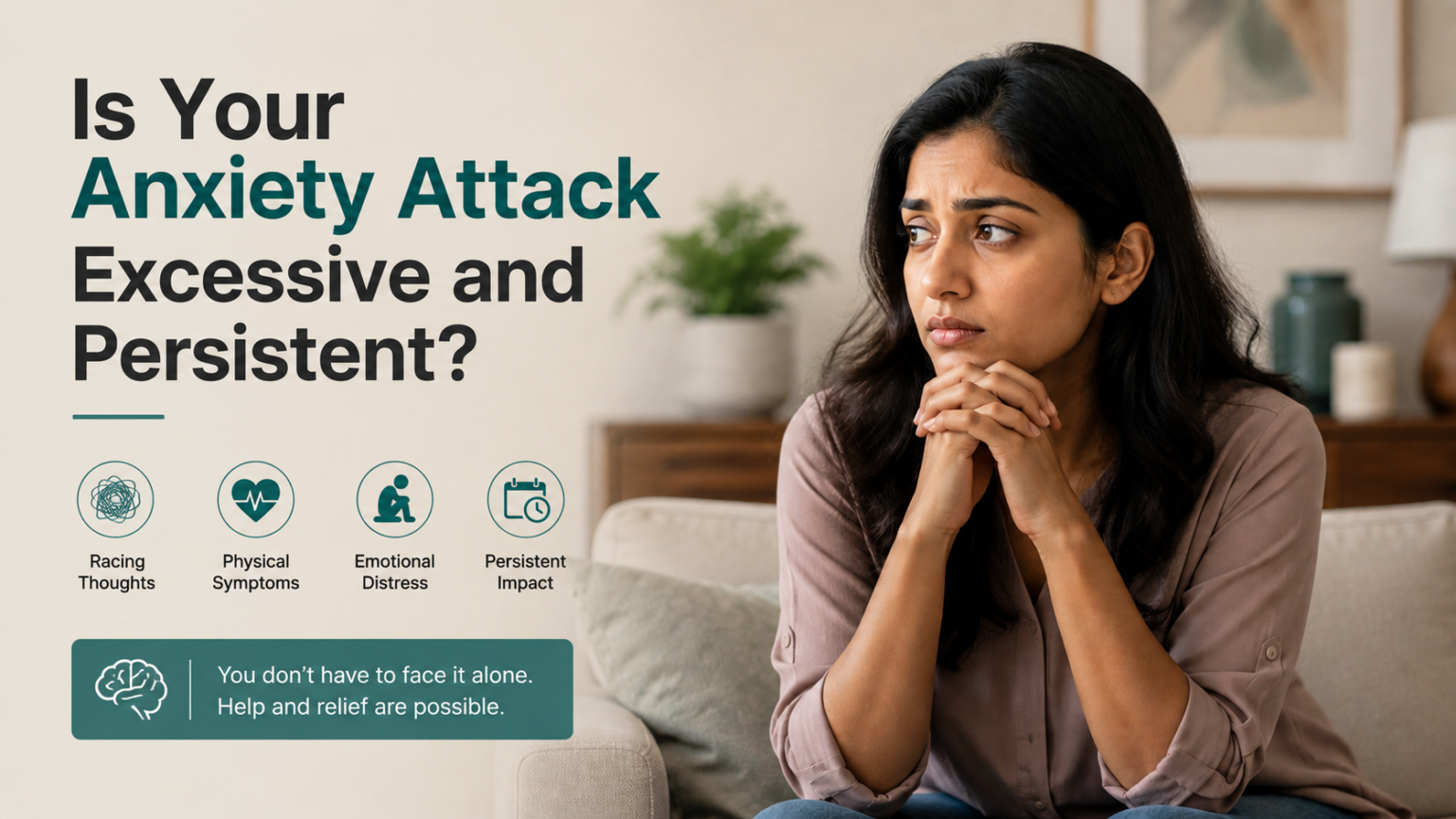
Is Your Anxiety Becoming Excessive and Persistent?
Feeling anxious from time to time is a normal part of life. You may feel nervous before an interview, worried about an examination, stressed about finances, or uneasy before an important decision.
But when anxiety becomes excessive, persistent, difficult to control, or disruptive to everyday life, it may be time to take a closer look at what’s happening.
An anxiety attack can involve racing thoughts, rapid heartbeat, sweating, trembling, chest tightness, dizziness, shortness of breath, fear, and an overwhelming feeling that something is wrong. These symptoms can be frightening, especially when they occur repeatedly.
If you’ve been searching for the best online anxiety counselling in India, you’re probably looking for more than temporary relief. You may want to understand why anxiety keeps returning and learn practical ways to manage it.
Fortunately, online counselling for anxiety can provide accessible mental health support from qualified professionals. Depending on your situation, counselling may help you understand anxiety triggers, identify unhelpful thought patterns, improve coping skills, and develop healthier responses to stress.
The key is recognising when anxiety has moved beyond an occasional reaction and started affecting your quality of life.
What Is an Anxiety Attack?
An anxiety attack generally refers to a period of intense anxiety, fear, nervousness, or overwhelming worry. The term is commonly used in everyday language, although mental health professionals may use more specific terms depending on the symptoms and diagnosis.
Anxiety can affect the mind, body, emotions, and behaviour simultaneously.
Common Anxiety Attack Symptoms
Physical symptoms may include:
Rapid or pounding heartbeat
Sweating
Shaking or trembling
Muscle tension
Chest tightness
Shortness of breath
Dizziness or light-headedness
Stomach discomfort
Fatigue
Difficulty sleeping
Psychological symptoms can include:
Racing thoughts
Excessive worrying
Fear of losing control
Irritability
Restlessness
Difficulty concentrating
Feeling overwhelmed
Constant anticipation of something going wrong
Behavioural changes can also occur. Someone experiencing persistent anxiety may start avoiding social situations, public speaking, travel, work meetings, crowded places, or other situations they associate with fear.
Why Does Anxiety Feel So Physical?
Anxiety activates the body’s stress response. Your brain may interpret a situation as threatening, causing your body to prepare to respond.
This can produce physical sensations such as a faster heartbeat or rapid breathing.
The sensations themselves can then become frightening.
For example:
Physical sensation → “Something is wrong” → Fear → More anxiety → Stronger physical sensations
This cycle can make anxiety feel increasingly difficult to control.
When Does Anxiety Become Excessive and Persistent?
Not every anxious feeling indicates an anxiety disorder.
The more important question is whether anxiety is becoming frequent, intense, difficult to control, or disruptive.
You may want to consider professional mental health support if anxiety:
Occurs frequently
Is difficult to control
Interferes with work or studies
Disrupts sleep
Affects relationships
Causes significant avoidance
Makes everyday decisions difficult
Creates persistent physical symptoms
Causes constant reassurance seeking
Reduces your overall quality of life
For example, feeling nervous before a presentation is common. However, avoiding presentations altogether because you’re terrified of being judged may indicate that anxiety is beginning to interfere with your functioning.
Persistent Anxiety vs Normal Stress
| Normal Stress | Persistent Anxiety |
|---|---|
| Usually connected to a specific situation | May continue even without an obvious immediate threat |
| Often improves when the situation ends | May continue for weeks or longer |
| Usually manageable | Can feel difficult to control |
| Limited effect on daily activities | May interfere with work, studies, sleep, or relationships |
| Often temporary | Can become a recurring pattern |
If you’re uncertain about your symptoms, a qualified psychologist or mental health professional can help you understand what you’re experiencing.
10 Common Signs of Excessive Anxiety
Recognising anxiety symptoms early can help you seek appropriate support.
1. Constant Worrying
You may spend a large part of your day worrying about health, finances, work, relationships, family, or future events.
2. Racing Thoughts
Your mind may jump rapidly from one concern to another, making it difficult to relax.
3. Difficulty Concentrating
Persistent worry can make it harder to focus on work, studying, conversations, or everyday tasks.
4. Sleep Problems
Anxiety can make it difficult to fall asleep or may cause you to wake up thinking about problems.
5. Physical Tension
Tight shoulders, headaches, jaw tension, stomach discomfort, and restlessness can accompany anxiety.
6. Avoidance
You may begin avoiding situations that trigger anxiety.
7. Reassurance Seeking
You might repeatedly ask others whether everything is okay or search online for reassurance.
8. Irritability
Constant mental pressure can make you more easily frustrated or emotionally exhausted.
9. Fear of Another Attack
After an intense episode, you may become worried that another anxiety or panic attack will happen.
10. Reduced Quality of Life
The strongest warning sign is often functional impact. If anxiety is stopping you from doing things that matter to you, professional support may be worth considering.
Anxiety Attack vs Panic Attack: What’s the Difference?
Anxiety attacks and panic attacks are often treated as interchangeable terms, but there are differences.
Anxiety often builds around a specific concern or perceived threat. You may gradually become more worried about an upcoming event.
A panic attack can involve a sudden and intense surge of fear or discomfort, sometimes without an obvious trigger.
Anxiety and Panic Comparison
| Factor | Anxiety | Panic Attack |
|---|---|---|
| Development | Often gradual | Can be sudden |
| Trigger | Frequently identifiable | May be unexpected |
| Main experience | Worry and apprehension | Intense fear or discomfort |
| Physical symptoms | Common | Often intense |
| Duration | Can continue for extended periods | Usually reaches a peak relatively quickly |
| Future concern | Often prominent | Fear may focus on immediate danger |
If you’re experiencing new or severe physical symptoms, don’t automatically assume they’re caused by anxiety. Medical evaluation may be necessary.
What Causes Persistent Anxiety?
Persistent anxiety doesn’t always have one single cause.
It can result from a combination of psychological, environmental, biological, lifestyle, and situational factors.
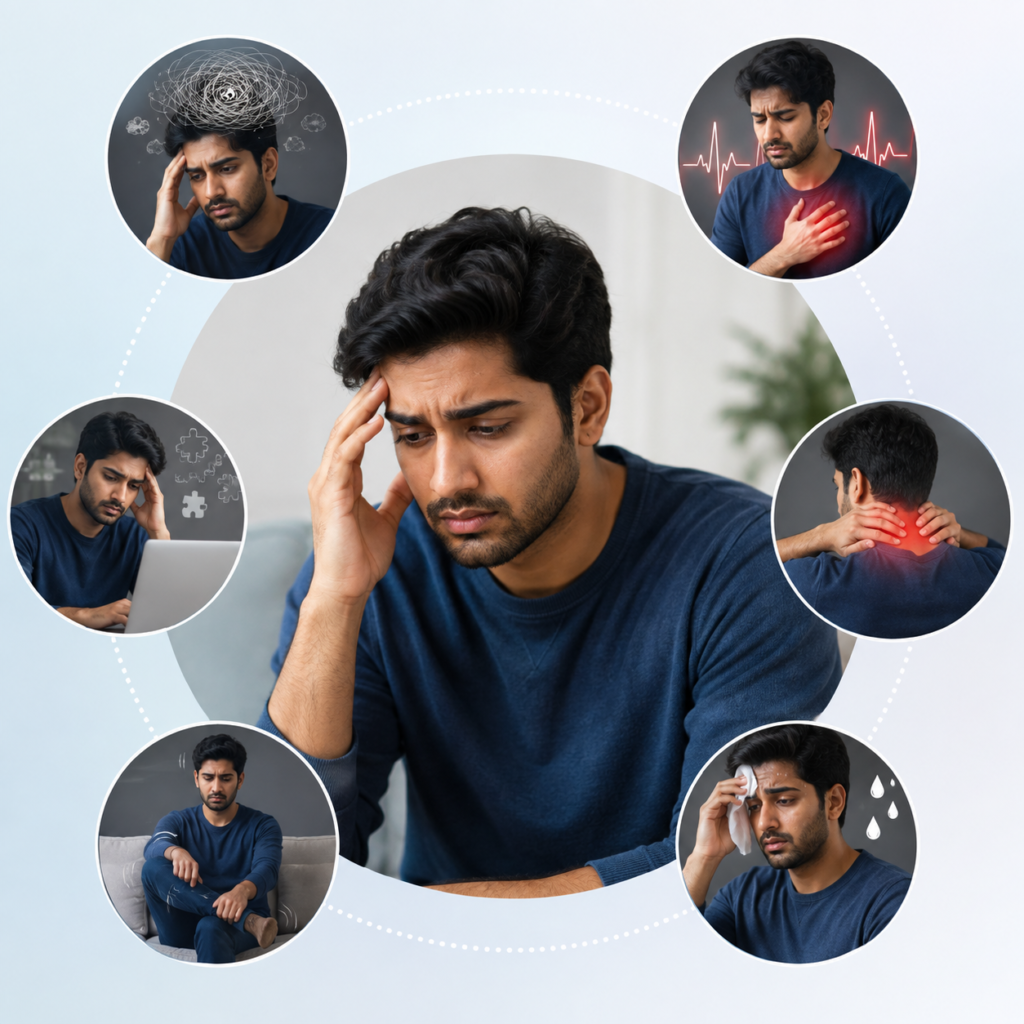
Common Anxiety Triggers
Chronic Stress
Long-term pressure at work, school, home, or in relationships can contribute to emotional exhaustion.
Major Life Changes
Moving, career changes, relationship difficulties, financial problems, bereavement, or other major transitions can increase stress.
Sleep Problems
Poor sleep can make it harder to regulate emotions and cope with everyday stress.
Excessive Caffeine
High caffeine intake can increase jitteriness, restlessness, and sensations that may feel similar to anxiety.
Overthinking
Repeatedly imagining negative outcomes can reinforce anxious thinking patterns.
Past Experiences
Previous difficult experiences can influence how someone responds to perceived threats.
Health Concerns
Some medical conditions and medications can produce symptoms that resemble anxiety, so professional evaluation can be important.
7 Powerful Ways to Manage Anxiety Attacks
Managing anxiety isn’t necessarily about eliminating every worried thought.
Instead, it’s about learning to recognise anxiety, understand your triggers, and respond to symptoms in healthier ways.
1. Practise Slow and Controlled Breathing
When anxiety rises, breathing can become rapid or shallow.
Try slowing your breathing and keeping it comfortable. Focus on a gentle, unforced rhythm rather than trying to take extremely deep breaths.
The goal is to reduce the feeling of urgency and bring your attention back to the present.
2. Use Grounding Techniques
Grounding techniques can help redirect attention from racing thoughts to your immediate surroundings.
Try noticing:
5 things you can see
4 things you can feel
3 things you can hear
2 things you can smell
1 thing you can taste
This technique can be particularly useful when your mind is focused on “what if” scenarios.
3. Challenge Catastrophic Thinking
Anxiety often makes the worst possible outcome feel inevitable.
Ask yourself:
What evidence supports this thought?
Then ask:
Is there another realistic explanation?
You don’t need to replace negative thoughts with unrealistic positivity. The goal is balanced thinking.
4. Improve Your Sleep Routine
Maintain consistent sleep and wake times when possible.
Create a relaxing bedtime routine and reduce stimulating activities before bed.
If sleep difficulties continue, discuss them with an appropriate healthcare professional.
5. Stay Physically Active
Regular physical activity can support emotional well-being.
You don’t need an intense workout. Walking, stretching, cycling, yoga, swimming, or another activity you enjoy can be a good starting point.
6. Reduce Avoidance Gradually
Avoidance can provide immediate relief but may reinforce anxiety over time.
With appropriate professional guidance, gradual exposure to feared situations may help you develop confidence and reduce avoidance.
7. Consider Professional Anxiety Counselling
If anxiety keeps returning despite your efforts, professional support can help.
A qualified psychologist or counsellor can help you understand:
Anxiety triggers
Unhelpful thought patterns
Avoidance behaviours
Emotional responses
Coping strategies
Stress-management techniques
For people searching for the best online anxiety counselling in India, online therapy may provide a convenient way to access professional support without travelling to a clinic.
How Online Counselling for Anxiety Can Help
Online counselling for anxiety allows people to connect with qualified mental health professionals through remote sessions.
Depending on the service and professional, sessions may be conducted through secure video, audio, or other appropriate communication methods.
Potential Benefits of Online Anxiety Counselling
| Benefit | Potential Advantage |
|---|---|
| Convenience | Attend sessions from a suitable private location |
| Accessibility | Connect with professionals beyond your immediate area |
| Flexibility | Easier scheduling around work or studies |
| Familiar environment | Some people feel more comfortable at home |
| Continuity | Remote sessions can make regular appointments easier |
Online counselling isn’t simply about talking through your problems.
A structured therapy process may involve identifying anxiety triggers, examining thought patterns, learning coping techniques, developing behavioural strategies, and tracking progress.
Who Can Consider Online Anxiety Counselling?
Online support may be useful for people experiencing:
Excessive worrying
Persistent stress
Anxiety attacks
Social anxiety symptoms
Work-related anxiety
Relationship-related anxiety
Health-related worries
Fear and uncertainty
Sleep difficulties associated with anxiety
Difficulty managing everyday stress
A professional can determine whether online counselling is appropriate for your particular needs.
CBT for Anxiety: How Cognitive Behavioral Therapy Works
Cognitive Behavioral Therapy (CBT) is a commonly used psychological approach for anxiety.
CBT focuses on the relationship between:
Thoughts → Feelings → Physical sensations → Behaviours
For example, imagine someone thinks:
“If I make one mistake during this presentation, everyone will think I’m incompetent.”
That thought may trigger anxiety, physical tension, and an urge to avoid the presentation.
CBT can help the person examine the thought, consider evidence, develop a more balanced interpretation, and gradually practise healthier behaviours.
Common CBT Strategies for Anxiety
Identifying cognitive distortions
Challenging catastrophic thinking
Behavioural experiments
Gradual exposure
Relaxation strategies
Problem-solving
Monitoring anxiety triggers
Developing healthier coping responses
A qualified professional can determine whether CBT or another therapeutic approach is appropriate.
Anxiety and Everyday Life: Work, Relationships, and Studies
Persistent anxiety can affect more than your emotional state.
Anxiety at Work
You may struggle with:
Presentations
Meetings
Deadlines
Decision-making
Concentration
Workplace communication
Anxiety During Studies
Students may experience:
Exam anxiety
Fear of failure
Procrastination
Difficulty concentrating
Excessive academic worry
Anxiety in Relationships
Anxiety may contribute to:
Reassurance seeking
Overanalysing conversations
Fear of rejection
Irritability
Emotional withdrawal
The impact on everyday functioning is one reason professional anxiety counselling can be useful.
When Should You See a Psychologist for Anxiety?
You don’t have to wait until anxiety becomes unbearable.
Consider consulting a qualified psychologist or mental health professional if:
Anxiety is persistent.
You can’t control your worries.
Anxiety affects your sleep.
You’re avoiding important activities.
Work or studies are suffering.
Relationships are being affected.
Physical anxiety symptoms are frequent.
You’re constantly afraid of another anxiety attack.
Self-help techniques aren’t enough.
Anxiety is reducing your quality of life.
Important: Don’t Ignore Serious Physical Symptoms
Anxiety can cause physical sensations, but not every physical symptom is caused by anxiety.
If you experience severe chest pain, serious breathing difficulty, fainting, new neurological symptoms, or another emergency-type symptom, seek appropriate urgent medical attention.
Anxiety Treatment: What Are the Options?
Anxiety treatment depends on the individual’s symptoms, circumstances, and professional assessment.
Potential approaches may include:
Psychological Therapy
Therapy can help identify and change patterns that maintain anxiety.
Cognitive Behavioral Therapy
CBT is frequently used to address anxiety-related thoughts and behaviours.
Lifestyle Changes
Sleep, exercise, stress management, social connection, and healthy routines can complement professional care.
Medication
In some circumstances, a doctor or psychiatrist may recommend medication. Medication should be used only under appropriate medical supervision.
Combined Treatment
Depending on the situation, psychological therapy and medical treatment may be used together.
There isn’t a single treatment that works identically for everyone.
8 Lifestyle Habits That Support Anxiety Management
Professional counselling can be valuable, but everyday habits can also support emotional well-being.
Maintain a Regular Routine
A predictable daily routine can create structure and reduce unnecessary stress.
Get Adequate Sleep
Prioritise a consistent sleep schedule and a calming bedtime routine.
Exercise Regularly
Choose an activity that you can realistically maintain.
Monitor Caffeine
If caffeine increases nervousness or physical anxiety symptoms, consider reducing your intake.
Stay Connected
Supportive relationships can reduce isolation and provide emotional perspective.
Take Regular Breaks
Constant work without recovery can contribute to mental fatigue.
Practise Mindfulness
Mindfulness can help you notice thoughts and sensations without automatically reacting to them.
Reduce Excessive Reassurance Seeking
Repeated reassurance may provide short-term relief but can sometimes reinforce anxiety in the long term.
What to Do During an Anxiety Attack
When anxiety suddenly becomes intense, focus on managing the immediate moment rather than solving every problem at once.
Step 1: Pause
Move to a safe and comfortable place if possible.
Step 2: Slow Down
Relax your shoulders and allow your breathing to become steady.
Step 3: Name the Experience
Tell yourself:
“I’m experiencing intense anxiety right now.”
Naming the experience can help separate you from the feeling.
Step 4: Ground Yourself
Focus on your surroundings using your senses.
Step 5: Avoid Catastrophic Predictions
An anxious mind may immediately assume the worst.
Try to focus on what is happening right now rather than predicting everything that could go wrong.
Step 6: Allow the Anxiety to Pass
Anxiety can rise and fall like a wave. You don’t have to fight every sensation.
Step 7: Reflect Afterwards
Once you’re calmer, consider what happened, what triggered it, and what helped.
If anxiety attacks continue, professional assessment can help identify the broader pattern.
Best Online Anxiety Counselling in India: How to Choose the Right Support
Searching for the best online anxiety counselling in India can produce many options. However, the “best” service isn’t necessarily the one with the most advertisements or the highest number of claims.
Consider the following factors.
Check Professional Qualifications
Look for appropriately qualified and experienced mental health professionals.
Consider Anxiety Experience
If anxiety is your primary concern, consider whether the professional has experience working with anxiety-related concerns.
Understand the Therapy Approach
Ask what therapeutic approach may be appropriate for your situation.
Check Privacy Practices
Mental health conversations are personal. Understand how sessions and personal information are handled.
Look for Clear Communication
A good professional should explain the counselling process, expectations, and possible next steps clearly.
Consider Compatibility
Therapeutic relationships matter. Feeling comfortable communicating with your counsellor can make the process easier.
Don’t Choose Solely on Price
Cost matters, but qualifications, suitability, privacy, experience, and therapeutic fit should also be considered.
Online Counselling for Anxiety: What Happens in a First Session?
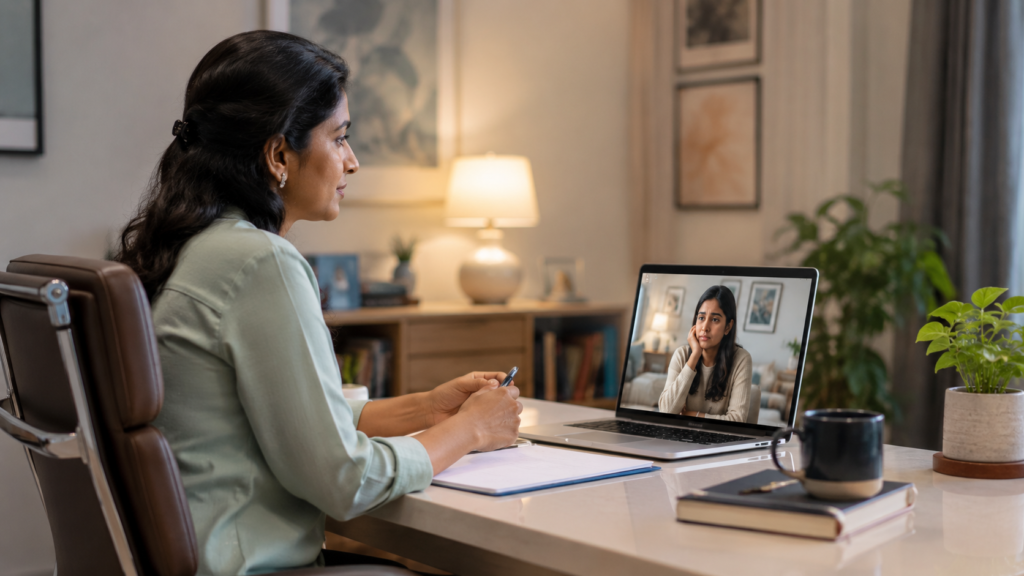
If you’ve never tried therapy, you may wonder what happens during your first online counselling session.
Typically, the professional may ask about:
Your current concerns
Anxiety symptoms
When symptoms began
Possible triggers
Sleep and daily routine
Work or study impact
Relationships
Previous mental health support
Your goals for counselling
You don’t need to have everything figured out before your first session.
You can simply explain what you’ve been experiencing.
The professional can then help you understand possible patterns and discuss appropriate next steps.
Frequently Asked Questions About Anxiety Attacks and Online Counselling
1. Is having frequent anxiety attacks normal?
Occasional anxiety is common, but frequent or severe episodes that interfere with daily functioning should be taken seriously. Consider speaking with a qualified mental health professional if anxiety is persistent or difficult to manage.
2. What are the most common symptoms of an anxiety attack?
Common symptoms include racing thoughts, excessive worry, rapid heartbeat, sweating, trembling, muscle tension, breathlessness, dizziness, restlessness, and fear. Symptoms vary from person to person.
3. How can I control an anxiety attack?
Slow breathing, grounding techniques, reducing stimulation, and focusing on the present moment may help you cope with an intense episode. If attacks happen repeatedly, professional assessment can help address the underlying pattern.
4. Can persistent anxiety be treated?
Yes. Anxiety can often be managed with appropriate psychological support, lifestyle changes, and, when clinically appropriate, medical treatment. The right approach depends on the individual.
5. Is online counselling for anxiety effective?
Online counselling can provide access to qualified mental health professionals and may be a convenient option for many people. Suitability depends on the person’s needs and circumstances.
6. What is the best therapy for anxiety?
There isn’t one universally best therapy. CBT is a commonly used evidence-based approach for many anxiety concerns, but a professional assessment can help determine which approach is most appropriate.
7. Can anxiety cause physical symptoms?
Yes. Anxiety may produce physical symptoms such as rapid heartbeat, sweating, trembling, muscle tension, dizziness, and breathing changes. However, unusual or severe physical symptoms shouldn’t automatically be assumed to be anxiety.
8. When should I see a psychologist for anxiety?
Consider professional support when anxiety is persistent, difficult to control, affecting your sleep or relationships, interfering with work or studies, or causing significant avoidance.
9. How does online anxiety counselling work?
Online counselling generally involves scheduled remote sessions with a qualified mental health professional. Sessions may focus on understanding symptoms, identifying triggers, developing coping strategies, and working toward personalised goals.
10. How do I find the best online anxiety counselling in India?
Look for appropriately qualified professionals, relevant experience, transparent processes, privacy practices, suitable therapy approaches, and a counselling relationship in which you feel comfortable communicating.
Conclusion: Take Persistent Anxiety Seriously
Anxiety is a normal human response, but excessive and persistent anxiety can become overwhelming when it starts controlling your decisions, relationships, work, studies, sleep, or everyday activities.
The good news is that experiencing anxiety doesn’t mean you’re stuck with it forever.
Simple strategies such as grounding, controlled breathing, physical activity, healthy sleep routines, and balanced thinking can support anxiety management. However, when anxiety continues despite your efforts, professional support may be the next sensible step.
For people searching for the best online anxiety counselling in India, online therapy can provide a convenient way to connect with a qualified mental health professional.
Similarly, online counselling for anxiety can help people explore anxiety triggers, understand thought patterns, develop coping skills, and work toward better emotional well-being.
You don’t need to wait until anxiety becomes unbearable before asking for help.
Recognising the problem is already a meaningful first step.